

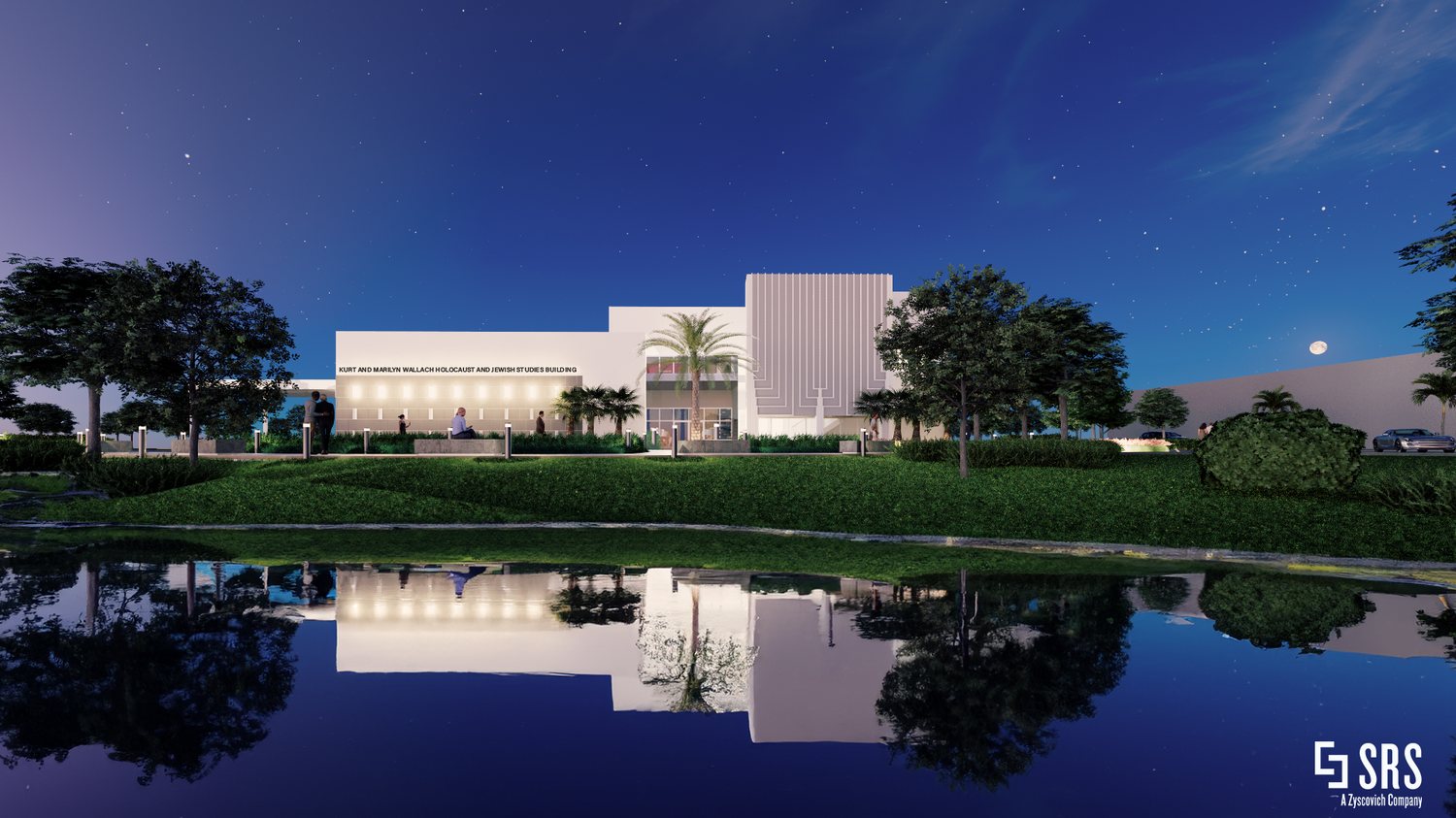
On the campus of Florida Atlantic University, something remarkable is taking shape. Rising from the heart of our university is a transformational space that will serve not only our students and faculty, but also the broader South Florida community for generations to come.
Fundamentally the new Kurt and Marilyn Wallach Holocaust and Jewish Studies Building is a story about optimism, a testament to what can happen when visionary philanthropy, academic excellence, and community partnership come together in pursuit of a greater good. It will provide a place where individuals from all backgrounds can gather to explore history, celebrate culture, and engage in meaningful dialogue.
At a time when communities around the world are searching for ways to address division and misunderstanding, educational institutions have an important role to play. The most effective response to ignorance is knowledge. The most powerful answer to prejudice is understanding. By fostering education, research, and cultural engagement, this building will help cultivate empathy and critical thinking skills that strengthen communities and enrich civic life.
VALUE LIES IN INSPIRATION
While buildings are often measured in square footage and architectural features, their true value lies in the ideas they inspire and the lives they touch. This new facility represents far more than bricks and mortar. Thanks to the Wallach family and a growing number of other donors, it is a bold investment in education, scholarship, cultural engagement, and community connection. Vitally, it reflects a shared commitment to understanding our past while building a more compassionate and inclusive future.
When the doors open in the Spring of 2027, students will discover new opportunities for learning. Scholars will advance important research. Artists and performers will inspire audiences. Community members will encounter new ideas and meaningful experiences. Visitors will leave with a deeper appreciation for both history and the enduring power of the human spirit. Most of all, the building will stand as a beacon of learning, memory, and hope. It will remind us that understanding the past is essential to shaping a better future and that education remains one of the most powerful forces for positive change.
Thus, the building is designed as a vibrant academic and cultural hub where students, scholars, artists, community leaders, and visitors can gather to learn, reflect, and engage. It will be a place where difficult histories are explored with honesty, where diverse perspectives are welcomed, and where meaningful conversations can flourish. To that end the building will house FAU’s Jewish Studies academic program, the Leon Charney Diplomacy Program and our Center for Peace, Justice and Human Rights. In addition, the Gutterman Family Center for Holocaust and Human Rights Education, which supports 6-12 grade teachers across the region in teaching the lessons of the Holocaust, will have a new home for trainings and public programs.
WHAT YOU’LL DISCOVER
At Florida Atlantic University, we believe that education changes lives. Rather than focusing solely on the darkness of history, this new building will illuminate the extraordinary resilience of individuals and communities who chose hope, courage, and humanity in the face of adversity. Every exhibition, lecture, performance, research project, classroom discussion, and community event that takes place within this building will contribute to a broader culture of understanding and respect.
As a college dedicated to the transformative power of the humanities and the arts, we are especially excited about the building’s innovative environments that include the:
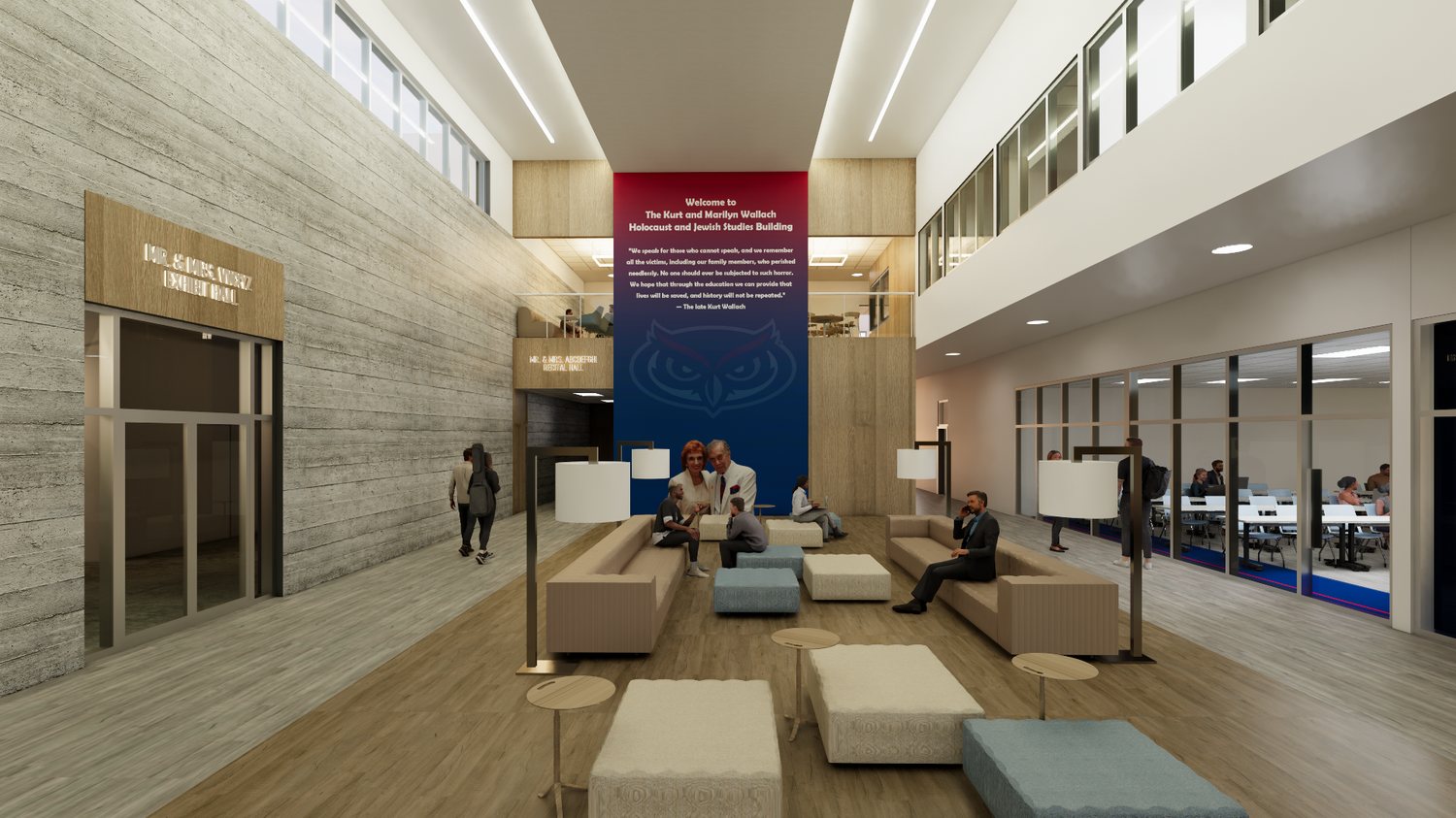
- Marilyn and Jay Weinberg Grand Lobby — A welcoming central gathering space designed to embody openness and connection. Designed to welcome students, visitors, and community members, the lobby will provide opportunities for informal interaction, reflection, and shared experiences
- Barry and Silvana Halperin Wall of Recognition and Remembrance — A contemporary digital installation sharing donor families’ and other stories, remembrances and expressions of gratitude.
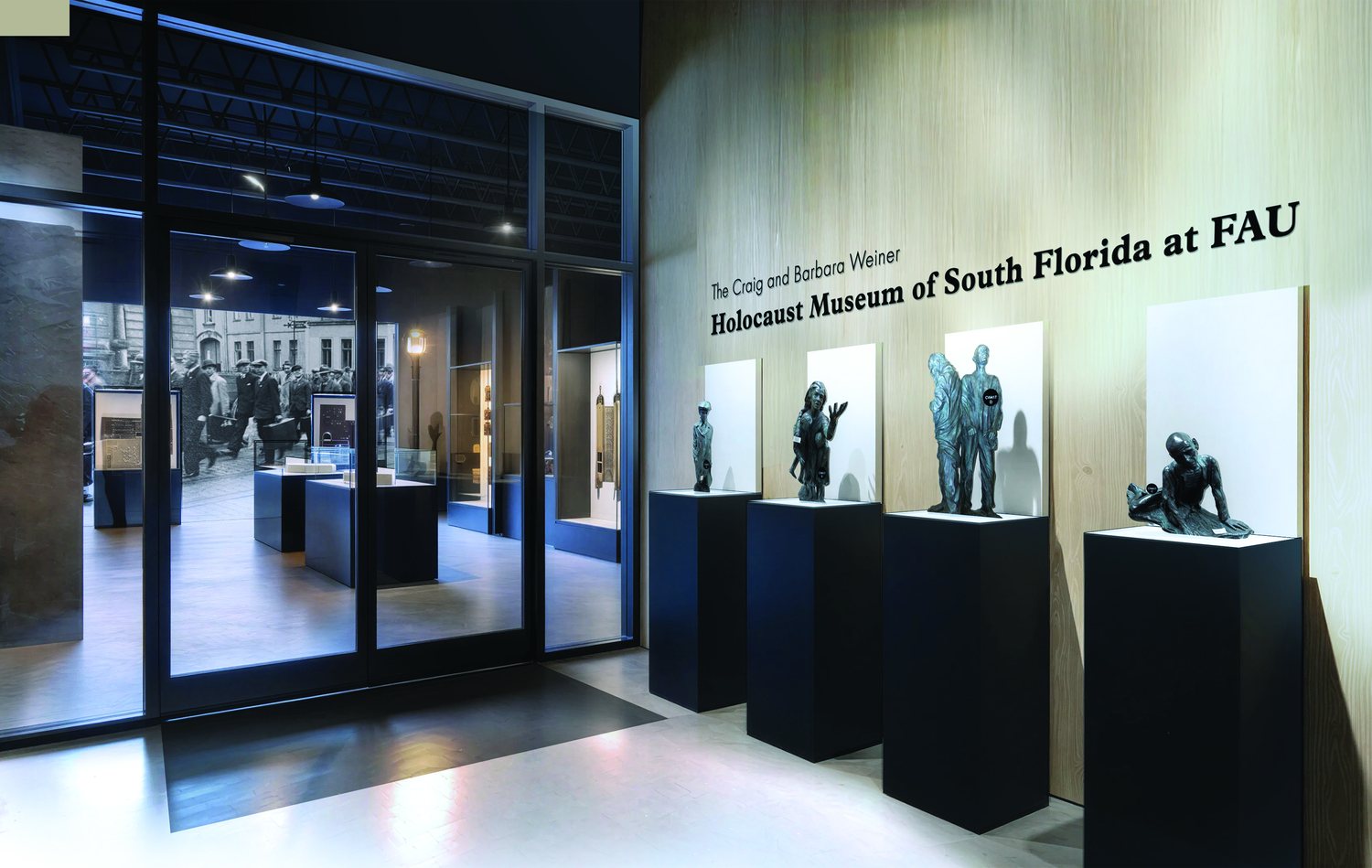
- Craig and Barbara Weiner Holocaust Museum of South Florida at FAU — An inspiring new home for a permanent exhibition of authentic artifacts, educational programming and public engagement. Thoughtfully curated educational experiences, visitors will gain a greater understanding of the Holocaust while exploring universal themes of resilience, human dignity, courage, and responsibility.
- Alisa and Richard Cohen Family Immigration and Holocaust Research Stations — Interactive research stations where visitors can access international databases to explore family histories and ancestry.
- Traveling Exhibition Hall — A dedicated gallery enabling FAU to bring nationally and internationally recognized exhibitions to the community. This dynamic space will ensure that the venue remains a destination for fresh perspectives, innovative scholarship, and ongoing community dialogue.
- Marta and Jim Batmasian Memorial Pavilion — A beautiful outdoor setting for gatherings and reflection, created in memory of the Armenian Genocide.
- State-of-the-Art Classrooms and Conference Rooms — Flexible educational spaces designed to encourage collaboration, conversation and intellectual discovery.
- George and Irina Schaeffer Dimensions and Testimony Room — An immersive educational space using emerging technologies to bring historical experiences and testimony to life in powerful new ways.
- Digital History Lab — A cutting-edge research environment bringing historical scholarship and advanced digital technologies together to support innovative research and discovery.
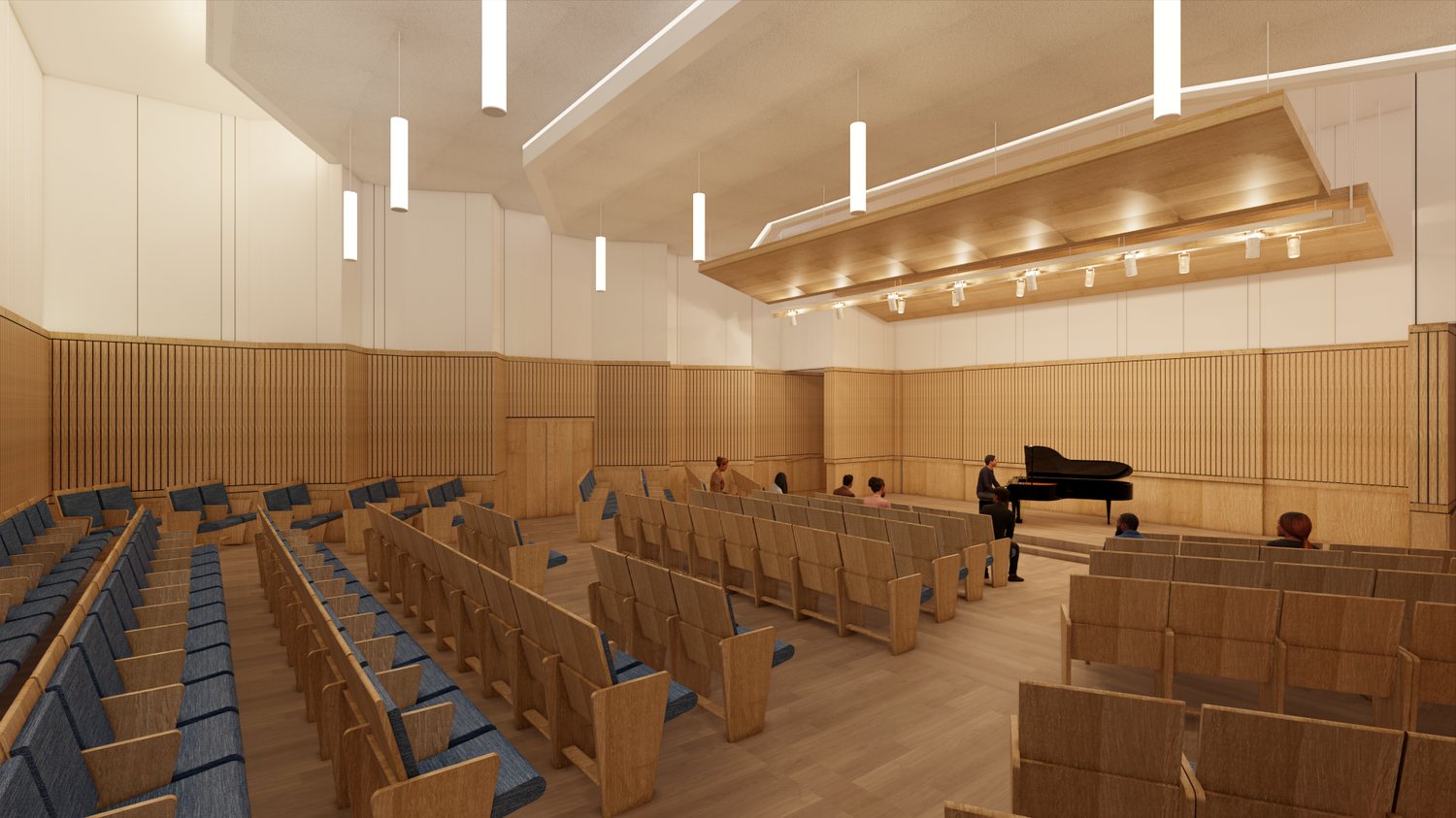
- State-of-the-Art Recital Hall — An auditorium that will expand opportunities for artistic expression and cultural programming.
For more information on how you can join with the “good people” making this project possible, contact me at [email protected].
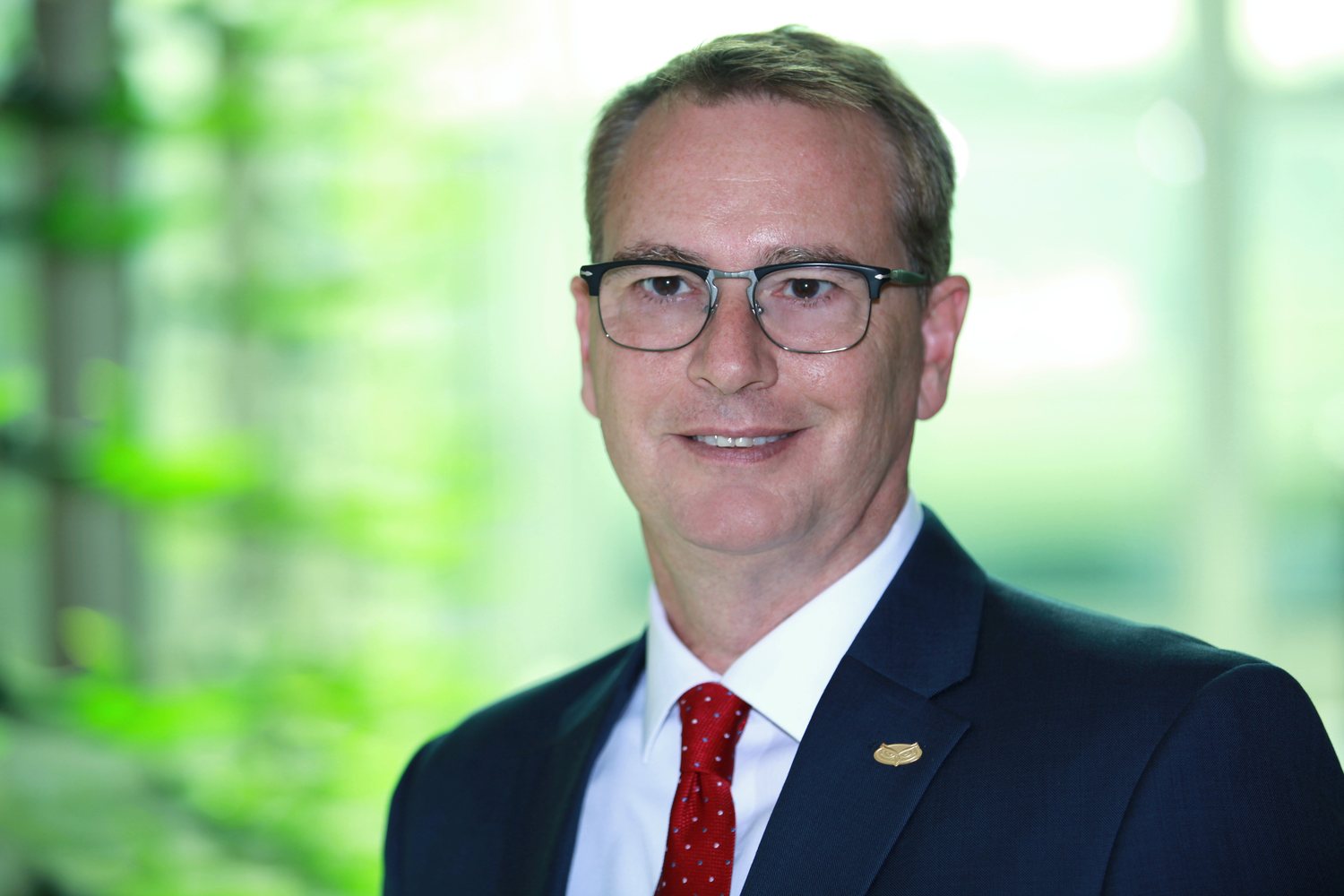
BY: Michael J. Horswell, Ph.D., is the Dean of the Dorothy F. Schmidt College of Arts and Letters at Florida Atlantic University, where he has provided academic and strategic leadership since 2017. A professor of Spanish and Latin American Literature, he advances interdisciplinary education across the arts, humanities and social sciences while strengthening the College’s connection to and impact throughout South Florida.
Love what you're reading?
Get the best of Boca Raton and Delray Beach delivered to your inbox every month — local stories, events, and good news worth sharing.
Subscribe for Free